GIF Animation Loop · 2015 · Duration: 1,000 years
ASLAP a 1,000-year animated GIF loop is an artwork by visual artist Juha van Ingen. The animation was created in collaboration with developer and sound artist Janne Särkelä. It has been playing continuously since 28 March 2017 in Helsinki and is held in the permanent collections of the National Gallery of Finland, the Victoria and Albert Museum, London, and ZKM -Center for Art and Media, Karlsruhe.
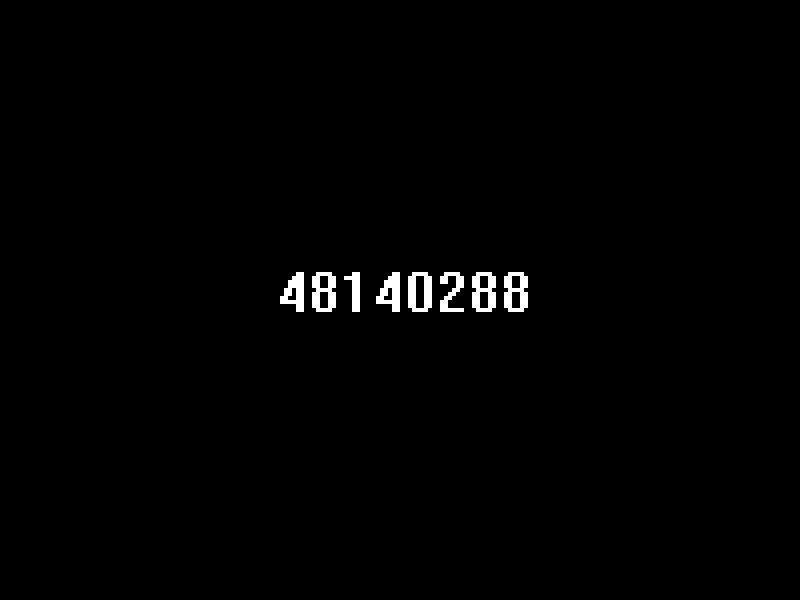
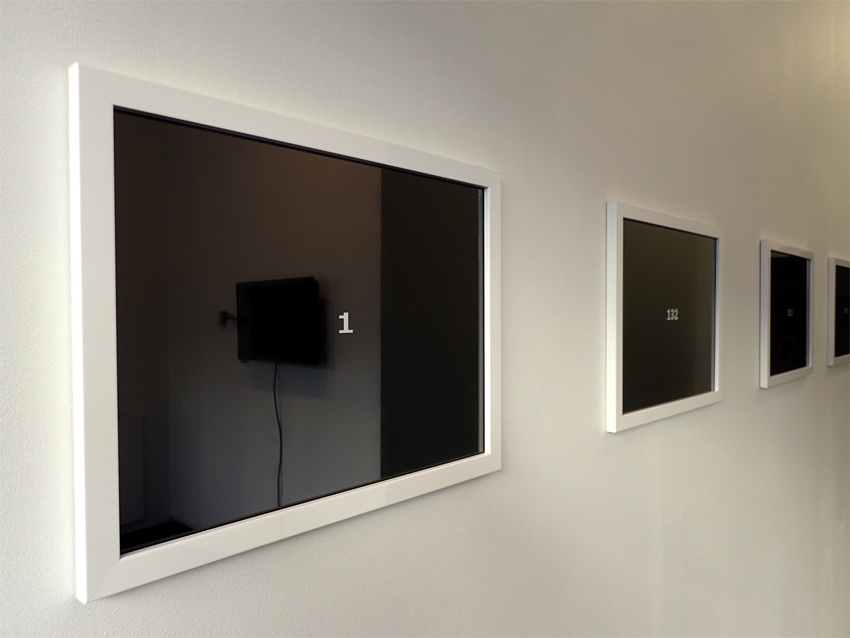
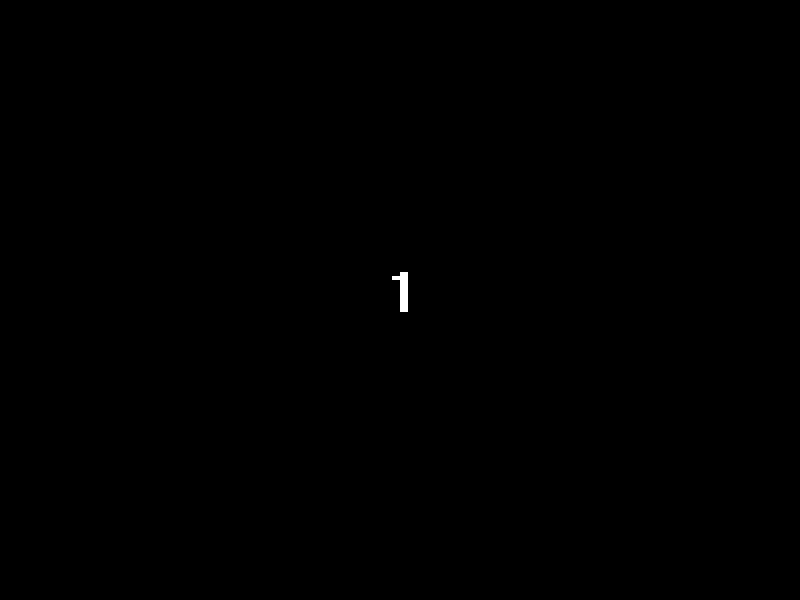
ASLAP consists of black frames with a white number indicating each frame's position in the loop, starting from 1. There are 48,140,288 frames which change at approximately 11-minute intervals, making the total duration of the loop 1,000 years.
The looping function is coded into the GIF file itself — when the last frame has been played the animation starts automatically from the beginning. The ultimate goal is to keep ASLAP playing forever.
"An animation of nothing else other than slowly changing frame numbers might seem a bit boring — but I think it makes it more exciting if you know that the next people to see the same frames of the animation you have just seen will live a 1,000 years from now."
— Juha van Ingen
The work turns eternity into a composition — unravelling the dimensions of time into units we can comprehend, while invoking deep questions of digital decay, institutional memory, and what it means for a cultural object to survive.
The name of ASLAP is an homage to John Cage's composition ORGAN2/ASLSP (1987), which is being performed in Halberstadt for the next 625 years. Cage's title abbreviated an instruction to the performer: As SLow aS Possible.
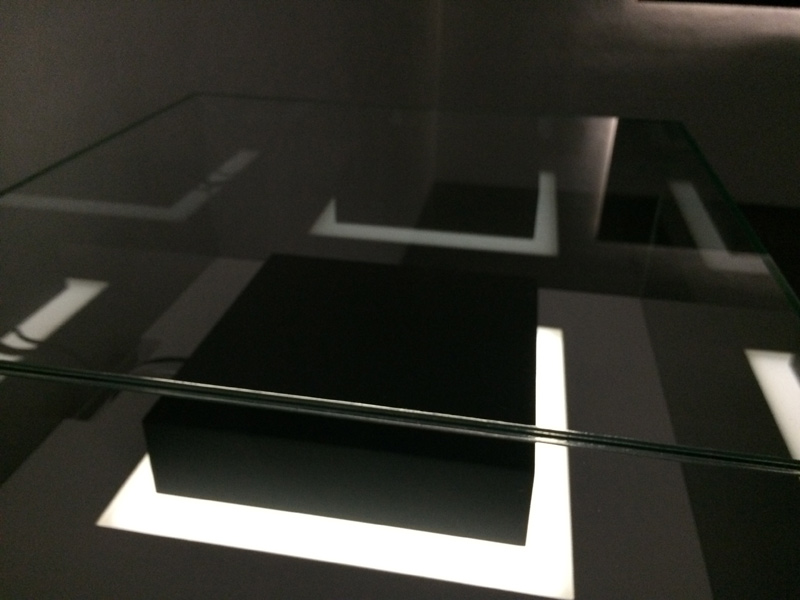
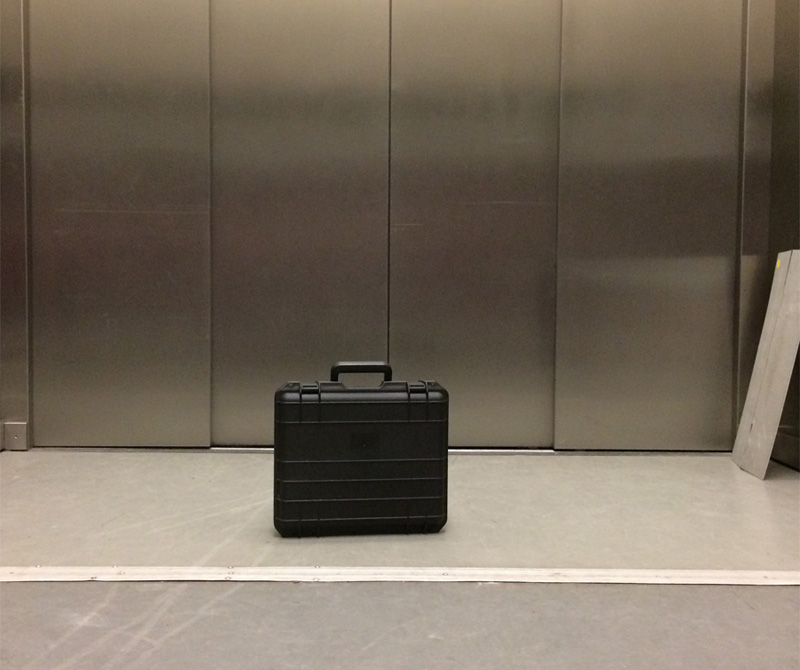
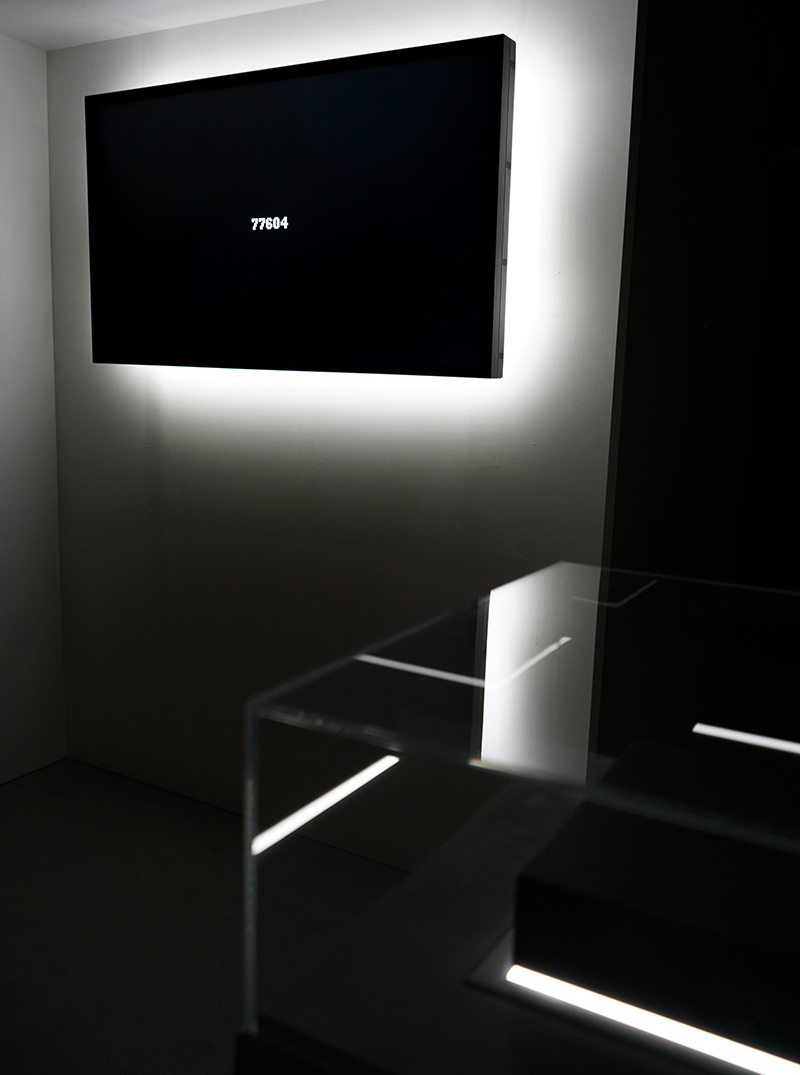
The ASLAP GIF file plays continuously on a total of five synchronised physical playback units held permanently in museums and archives in different countries. When one unit is destroyed or needs technical upgrading, a new one is built and synchronised with the remaining units. One transportable unit is held by the artist and is used to temporarily exhibit the artwork in other locations.
GIF was designed in 1987 and is a very simple file format by today's standards. The playback program will require upgrading over time — at the latest when computers as we know them become obsolete — but the simplicity of GIF gives future generations the means to continue.
Five stainless steel time capsules contain all documentation necessary to recreate the animation and set it playing from the correct frame. These exist for the worst-case scenario in which all playback units are simultaneously destroyed.
"The work turns eternity into a composition, unravelling the dimensions of time into chunks we can comprehend while also invoking questions of digital decay."Hyperallergic
"A wake-up call about the meaninglessness and impermanence of the constant stream of net effluvia we digest."Vice
"With 1,000 years of GIF-life ahead of us, there's no excuse not to see this GIF at some point in your — comparatively — short, short life."Milk
The first extended critical essay on ASLAP, published online to coincide with the work's initial presentation at FISH Gallery, Helsinki.
The first journalistic article on ASLAP, written by Claire Voon for Hyperallergic, establishing the work in the discourse around durational digital art and media preservation.
A critical publication produced in conjunction with the LIMA Amsterdam exhibition, comprising eight texts by heritage curators, conservators, art historians, and artists examining the work's conceptual, historical, and technical dimensions.
Texts by: Cécile Dazord · Sanneke Huismann · Juha van Ingen · Pontus Kyander · Jan Robert Leegte · Alexandre Michaan · Gaby Wijers · Kari Yli-Annala. Translation by Laurie Hurwitz.
Download PDF (2.6 MB) →| Format | GIF89a |
| Total frames | 48,140,288 |
| Frame interval | ~11 minutes |
| Duration | 1,000 years |
| Content | Black frame, white numeral |
| Loop mode | Infinite (coded into file) |
| Year created | 2015 |
| Started | 28 March 2017, 12:00:49.154 EEST |
The custom playback software — developed by coder Jani Lindqvist, with earlier work by Jouni Miikki — plays the GIF file with precise frame timing and handles synchronisation between geographically distributed units. The player was finalised in March 2017.
In 2020 the Finnish National Gallery initiated a documentation project to record in technical detail the code and functions of both the ASLAP GIF file and the Player 2.0, ensuring that future generations can reconstruct and maintain the work.
External hardware was crafted in stainless steel cases by Jukka Merta.
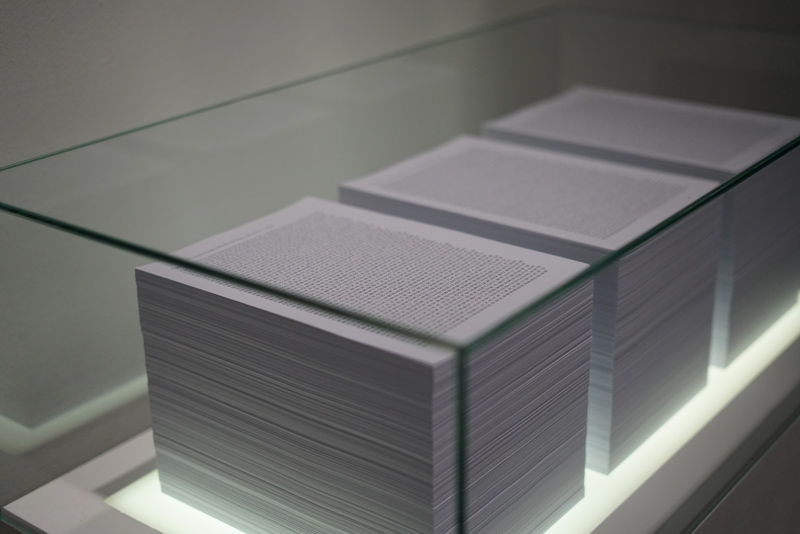
During the ARS17 exhibition at Kiasma in 2017, the 5,714 A4 pages containing the binary code of ASLAP frames 1–38,538 were exhibited alongside the playing unit — a materialisation of the file as a physical document.
GIF (Graphics Interchange Format) was developed by Stephen Wilhite for CompuServe in 1987. Despite the rise of technically superior formats, GIF's simplicity ensures it remains readable across platforms and time. The specification has not changed in over three decades.
In the early World Wide Web, GIF was the dominant medium for net art. Flash displaced it in the mid-1990s; the 2010s saw GIF's second cultural life through image-sharing platforms. ASLAP uses GIF as a conceptual medium precisely because of its age, simplicity, and indestructibility.
Each stainless steel time capsule contains complete documentation sufficient for an independent future civilisation to reconstruct and resume the animation from the correct frame number at any point in the 1,000-year span.
The first capsule was deposited in KUMU, Tallinn on 18 March 2017.
Supported by
AVEK (GIF creation, 2015) · Alfred Kordelin Foundation (time capsules) · KIASMA · KUMU · FRAME (LIMA exhibition) · TAIKE · Institut Finlandais (Paris exhibition)
For exhibition enquiries about the transportable unit, press and research requests, image permissions, and collection or support matters — please use the form below.
Message sent
Thank you. We will get back to you shortly.